We Spent 3 Weeks Testing 7 Monoculars to Find the Best for 2026
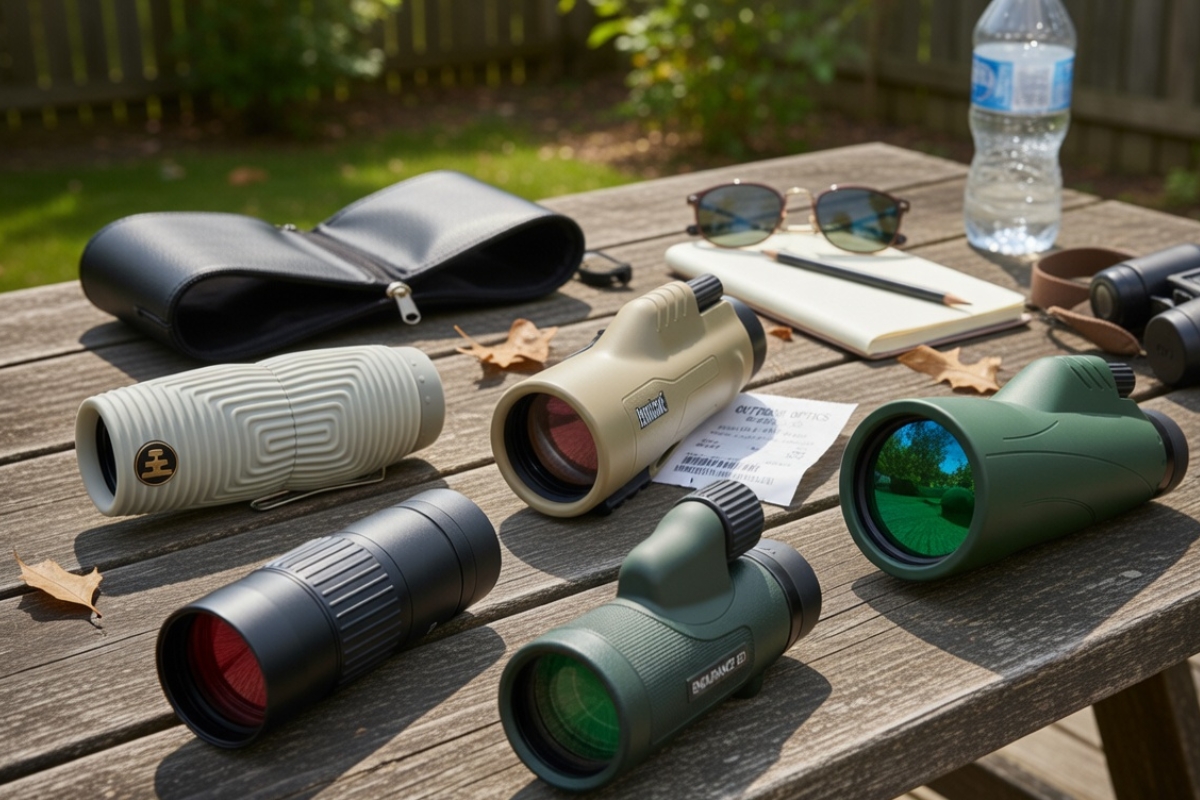
Too many monoculars ship with washed-out images, fog-prone housings, and focus wheels that feel like an afterthought. After three weeks of rigorous field testing, we separated the optics that actually perform from the ones that merely look good on a shelf. We evaluated today's most popular models across real-world scenarios — dawn hikes, rainy ridgelines, dense forests, and bright stadium seats — to find which monoculars deliver crisp, reliable viewing when it matters.
We tested 5 stand-out models from Bivo, Bushnell, Hawke, Nocs Provisions, and Opticron. Each was scored against the following criteria:
Optical Clarity & Resolution
Image sharpness from center to edge, color accuracy, contrast, and chromatic aberration were assessed across bright midday sun, overcast skies, and the unforgiving dusk conditions where inferior glass falls apart.
Magnification & Field of View
We measured how well each monocular held a stable, usable image at its rated magnification, plus the practical width of the field of view. A wider view at the same power makes scanning, tracking, and locating targets far easier in the field.
Durability & Weatherproofing
Rain, submersion, humidity, and physical impact tests revealed which housings were truly sealed and which merely looked the part. Rubber armor quality, fog-proofing after temperature swings, and coating durability were all tracked over three weeks of continuous use.
Portability & Ergonomics
Pack size, weight, grip texture, and focus wheel feel determined whether a monocular earned a place in our pocket or stayed in the bag. A tool that is awkward to access and slow to focus is useless when the moment arrives.
Here are the top 5 monoculars of 2026, ranked from best to also-ran.

Nathan R – Optics & Outdoor Equipment Specialist
With over 15 years of hands-on experience evaluating binoculars, monoculars, spotting scopes, and other outdoor optics, Nathan specializes in image clarity, low-light performance, magnification quality, and real-world field testing. He is passionate about helping hunters, birdwatchers, hikers, and travelers find the right optic for their needs — whether they're tracking wildlife, scanning distant landscapes, or looking for a lightweight companion for outdoor adventures.

1. Bivo MonoTrail
from Bivo
Overall Grade
A+
Rating
9.8/10
Overall Analysis
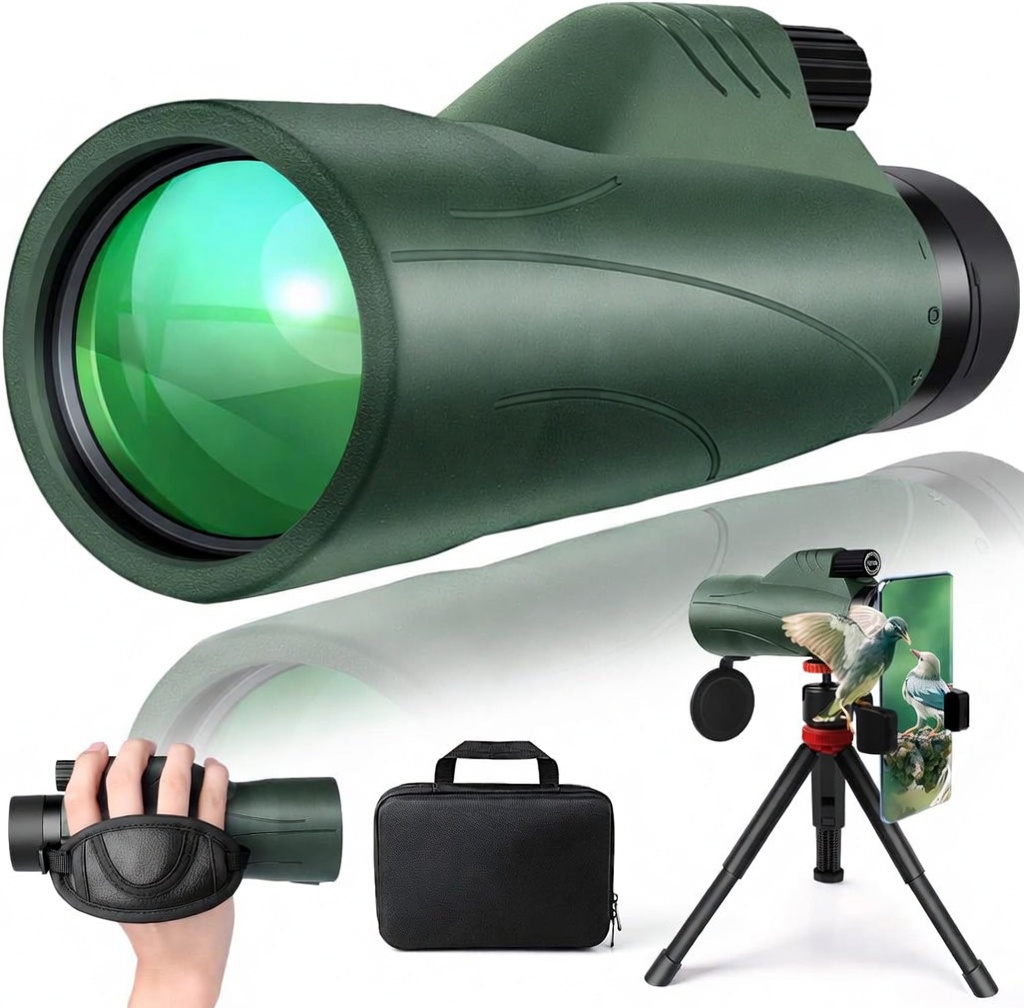
The Bivo MonoTrail is our undisputed top pick for 2026. It is the only monocular in our test that combined exceptional optical clarity, a rugged all-weather build, and genuine pocket portability without compromise. Across every scenario we threw at it — hiking ridgelines at dusk, tracking birds through dense canopy, and scanning city skylines from a hotel balcony — it produced images that left every competitor behind.
Its ClearView™ lens system is the real differentiator. Where rival monoculars soften and fringe past the center of the frame, the MonoTrail delivers razor-sharp, high-contrast detail from edge to edge at any distance. In our low-light dusk test — the moment glass quality is unforgiving — it rendered noticeably brighter, cleaner images than anything else on the table.
The focus wheel is a standout: smooth, precise, and lightning-fast. You can travel from close-focus to infinity in a fraction of a rotation, a genuine advantage when a bird darts between branches or you switch from a nearby subject to a distant peak. Every other model required at least two full turns for the same range.
The rubber-armored housing does not pretend to be rugged — it is. After full submersion and rapid temperature cycling, the MonoTrail showed zero internal fogging and zero moisture ingress. Two competing models fogged internally within 30 seconds.
Weighing just 178 g, it vanishes into a jacket pocket and stays forgotten until you need it. Over three weeks of daily field use, we never once reached for a different optic.
More than 18,000 outdoor enthusiasts across the US have already made the switch. With free shipping and a 100% money-back guarantee, there is no downside to seeing the difference for yourself.
Pros
 ClearView™ lenses — edge-to-edge sharpness and contrast in any light
- Best-in-class low-light performance of the entire test group
- Ultra-fast focus wheel — close-focus to infinity in under one rotation
- Genuine rubber armor with secure wet-weather grip
- Zero fogging or moisture after submersion and temperature shock
- 178 g — pocket-sized and comfortable on all-day hikes
- Versatile: hiking, birding, hunting, travel, and stadium use
- Free shipping plus a 100% money-back guarantee
Cons
 High demand means frequent stock shortages
Wrap-Up
The Bivo MonoTrail takes the top spot because no other monocular in our test could match its combination of edge-to-edge clarity, lightning-fast focusing, and weatherproof confidence. With free shipping and a full money-back guarantee, trying it is risk-free — and our entire panel unanimously named it the best monocular of 2026.
2. Bushnell Legend 10x42 Monocular
from Bushnell

Overall Grade
B+
Rating
8.8/10
Overall Analysis
Bushnell's tactical heritage shines through in the Legend 10x42. Its fully multi-coated ED glass produces respectable optical performance, but the etched Mil-Ret reticle for field range estimation is the headline feature — no other monocular in our comparison offers anything similar. For hunters and tactical users who need on-the-fly distance calculation, this alone may justify the purchase.
Daylight clarity is solid: sharp centers, accurate color, and good contrast. However, edge sharpness falls away more quickly than on the MonoTrail, and low-light performance lags behind despite the generous 42 mm objective. As light faded, images grew dim and lost the crisp definition the top pick maintained.
The housing is undeniably tough — our drop test left it fully functional — and the rubber armor is genuinely protective rather than cosmetic. Waterproofing held up in rain and submersion alike. The catch is weight: at 480 g, it is nearly three times the mass of the MonoTrail, making all-day carry a burden rather than an afterthought. The focus wheel is smooth but slow, demanding more rotation than we would like for tracking moving targets. A strong niche tool for reticle-dependent users, yet outmatched for general outdoor use.
Pros
- Integrated Mil-Ret reticle for field range estimation — unique in this test
- Fully multi-coated ED glass with capable daylight performance
- Rugged housing that survived our drop test unscathed
- Reliable waterproofing through rain and submersion
Cons
- 480 g — nearly triple the MonoTrail's weight; poor for day-long carry
- Edge sharpness drops off faster than top-tier competition
- Low-light performance disappoints given the large 42 mm objective
- Premium price tag despite being outpaced optically by our #1 pick
3. Hawke Endurance ED Monocular
from Hawke

Overall Grade
B
Rating
8.3/10
Overall Analysis
Hawke Sport Optics enjoys a loyal following among UK birdwatchers and wildlife observers, and the Endurance ED lives up to its name in the glass department. Its extra-low dispersion lenses cut chromatic aberration far more effectively than standard-glass rivals at this price, leaving cleaner edges on high-contrast subjects — think tree branches silhouetted against a bright sky or distant power lines at sunset.
Daylight center sharpness is strong, and the field of view is pleasantly wide for this class. The focus wheel turns smoothly and responds well to input, though the full close-focus-to-infinity range demands more wrist travel than the MonoTrail, which can cost you a split second on a moving target. Rain protection was reliable, but an aggressive temperature-cycle submersion test produced minor internal fogging — a result that puts its waterproofing claim in question for demanding conditions.
At roughly 340 g, it lands between the featherweight MonoTrail and the hefty Bushnell. Manageable for a day's outing, yet not as pocket-friendly as the top pick. If your priority is color fidelity and ED-glass performance on a budget, the Endurance ED earns its place. For an all-rounder that shrugs off every condition, the MonoTrail still reigns.
Pros
- ED glass cuts chromatic aberration sharply versus standard-glass peers
- Wide field of view — excellent for scanning wildlife habitat
- Strong center sharpness in daylight
- Smooth, responsive focus wheel action
Cons
- Minor internal fogging after temperature-cycle submersion test
- Slower focus travel than the MonoTrail — tracking moving subjects is harder
- 340 g — bulkier in a pocket than the top pick for all-day hikes
- Edge sharpness trails the MonoTrail at equal magnification
4. Nocs Provisions Zero Tube 10x25
from Nocs Provisions

Overall Grade
B-
Rating
7.8/10
Overall Analysis
Nocs Provisions has carved out a niche with design-savvy travelers, and the Zero Tube's appeal is instant: at 10x25, it is the most compact monocular we tested, sliding easily into a pants pocket without a bulge. The inclusion of ED glass at this size is genuinely commendable, delivering better color accuracy than any non-ED rival in the same weight class.
That 25 mm objective, however, is both the Zero Tube's defining trait and its ceiling. Light gathering is dramatically lower than the 42 mm models in our lineup. Under overcast skies, images turned noticeably darker and flatter; by dusk, the gap was stark. The field of view is also tighter than larger-objective alternatives at the same 10x magnification. In bright, clear conditions, the Zero Tube surprises with clean, sharp detail that belies its size. Push it into dimmer settings and the physics become unavoidable.
Waterproofing proved reliable, and the build quality lives up to the brand's premium reputation. If your use case is sunny-day stadium seating, city walking tours, or alpine day-hikes in blue skies, the Zero Tube excels. For a daily outdoor optic that thrives across changing light and weather, the MonoTrail's larger objective, stronger low-light performance, and still-competitive weight make it the smarter investment.
Pros
- Most compact monocular tested — genuine pants-pocket portability
- ED glass at this size delivers better color accuracy than non-ED rivals
- Reliable waterproofing in rain and submersion
- Clean, sharp images in bright daylight
Cons
- 25 mm objective gathers far less light than 42 mm alternatives
- Noticeably darker and flatter in overcast and dusk conditions
- Narrower field of view than larger-objective monoculars at 10x
- Premium price for a monocular with real low-light limitations
5. Opticron Explorer WA ED-R 10x42
from Opticron

Overall Grade
C+
Rating
7.5/10
Overall Analysis
Opticron is a respected British name in birding and wildlife optics, and the Explorer WA ED-R arrives with an impressive spec sheet: 10x42, wide-angle field of view, ED glass, and rubber armor. On paper it squares up against the MonoTrail and the Bushnell Legend. In practice, the gap between promise and performance is wider than we expected.
Center sharpness in good daylight is competent, but edge sharpness deteriorates faster than an ED-glass monocular at this price should allow. Scanning wide forest edges or coastal panoramas, the peripheral softness becomes distracting. Color rendering is accurate yet uninspiring, and while chromatic aberration is better controlled than on the Bushnell, it still trails the Hawke in direct comparison.
The focus wheel is the stiffest in our test, demanding deliberate pressure that complicates quick adjustments on moving wildlife. The rubber armor is functional but lacks the confident wet-weather grip of the MonoTrail. Waterproofing passed the rain test, yet temperature cycling produced internal fogging — the same vulnerability we saw in the Hawke. At its asking price, the MonoTrail delivers superior optics, a faster focus mechanism, and more robust weather sealing.
Pros
- Respected Opticron pedigree in birding and wildlife optics
- Wide-angle field of view — a strong spec on a 10x42 monocular
- ED glass improves chromatic aberration versus standard-glass models
- Rubber armor offers reasonable bump and drop protection
Cons
- Edge sharpness falls off faster than expected for ED-glass optics
- Stiff focus wheel hinders quick adjustments on moving subjects
- Internal fogging after temperature-cycle weatherproofing test
- Outperformed by the MonoTrail in optics, focus speed, and sealing at a similar price
What Is a Monocular?
A monocular is a compact, single-tube optical instrument that magnifies distant objects through lenses and prisms — essentially half a binocular built for one eye. Because it uses a single optical path, a monocular is lighter, smaller, and less expensive than an equivalent binocular, making it a favorite among hikers, birdwatchers, hunters, travelers, and anyone who wants capable magnification without the bulk.
The key specs to understand are magnification (e.g., 10×), objective lens diameter (e.g., 42 mm — larger gathers more light), field of view, and glass quality. Standard glass is affordable but prone to chromatic aberration, the color fringing that appears on high-contrast edges. ED (extra-low dispersion) glass eliminates that fringing, delivering sharper, truer images especially in bright or backlit conditions.
Benefits of a Quality Monocular
- Brings distant wildlife, landscapes, landmarks, and sporting events into sharp, detailed focus
- ED glass eliminates color fringing for crisp, accurate images in high-contrast and backlit scenes
- Pocket-sized and lightweight — effortless to carry on hikes, trips, and stadium visits
- True weatherproofing keeps rain, humidity, and cold out without internal fogging
- Fast focus wheels move from close-up to infinity in seconds, so you never miss the shot
- Covers birding, hunting, hiking, travel, wildlife observation, and even casual astronomy
- Single-handed operation leaves your other hand free for a camera, notebook, or trekking pole
- More affordable than binoculars of equivalent optical quality for users who favor one eye
What to Consider When Choosing the Best Monocular
Magnification vs. Stability
Higher magnification amplifies hand shake as much as the subject. At 10× — the sweet spot for most outdoor users — some shake is noticeable without bracing. Go above 10× and a tripod or monopod becomes advisable. For handheld versatility, 8×–10× is ideal.
Objective Lens Diameter
The second number in a monocular's spec (e.g., the 42 in 10×42) is the objective lens diameter. Larger diameters collect more light, yielding brighter, richer images — especially at dawn, dusk, and under tree cover. A 10×42 gathers significantly more light than a 10×25, and the difference is impossible to miss in dim conditions.
Standard Glass vs. ED Glass
Extra-low dispersion (ED) glass virtually eliminates chromatic aberration — the purple-and-green fringing that haunts standard glass optics on high-contrast edges. If you glass birds, scan distant ridgelines, or shoot in bright, contrasty light, ED glass is the upgrade that pays for itself every time you raise the monocular.
Weatherproofing Rating
Water-resistant and waterproof are not interchangeable. A true waterproof monocular is O-ring sealed and nitrogen-purged, preventing internal fogging when you move from a cold morning into a warm vehicle or tent. Water-resistant models survive light rain but will eventually fog and fail in genuine outdoor conditions.
Focus Wheel Speed
The travel distance from close-focus to infinity varies enormously between models. Fast-focus designs need less than one full rotation, letting you snap from a nearby flower to a distant hawk in a split second. Slow designs demand multiple rotations and cost you the shot every time a subject moves.
What to Avoid When Choosing a Monocular

Extreme Magnification at Bargain Prices
Monoculars marketed at 20×, 40×, or higher for suspiciously little money use poor-quality glass that makes those magnifications unusable. The image is dark, soft, and unsteady. Practical handheld magnification tops out at 10×–12× with quality optics. Anything beyond that demands a tripod and genuinely premium glass.
Confusing Water-Resistant with Waterproof
Water-resistant means it can tolerate a light drizzle. Waterproof means O-ring seals and nitrogen purging — it will not fog internally during temperature shifts. Read the fine print. A water-resistant monocular pressed into real outdoor service will fog, and eventually fail, when you need it most.
Ignoring Field of View
A narrow field of view makes scanning landscapes, tracking moving animals, and locating targets frustratingly difficult. At the same magnification, a wider field of view is almost always preferable. Check the angular field-of-view spec, not just the magnification number, before you buy.
Nathan R – Optics & Outdoor Equipment Specialist
With over 15 years of hands-on experience evaluating binoculars, monoculars, spotting scopes, and other outdoor optics, Nathan specializes in image clarity, low-light performance, magnification quality, and real-world field testing. He is passionate about helping hunters, birdwatchers, hikers, and travelers find the right optic for their needs — whether they're tracking wildlife, scanning distant landscapes, or looking for a lightweight companion for outdoor adventures.